Attendance Automation: Biometric vs. App-Based Tracking
By the Aaganera People Ops Team
"How should employees clock in?" sounds like a small operational question, but the answer shapes hardware budgets, IT support tickets, and how welcome employees feel walking into work every morning. The two dominant approaches — biometric devices and app-based geofenced check-ins — solve the same problem in fundamentally different ways, and the right choice depends far more on your workforce than on which technology is "newer."
Biometric devices: high certainty, high overhead
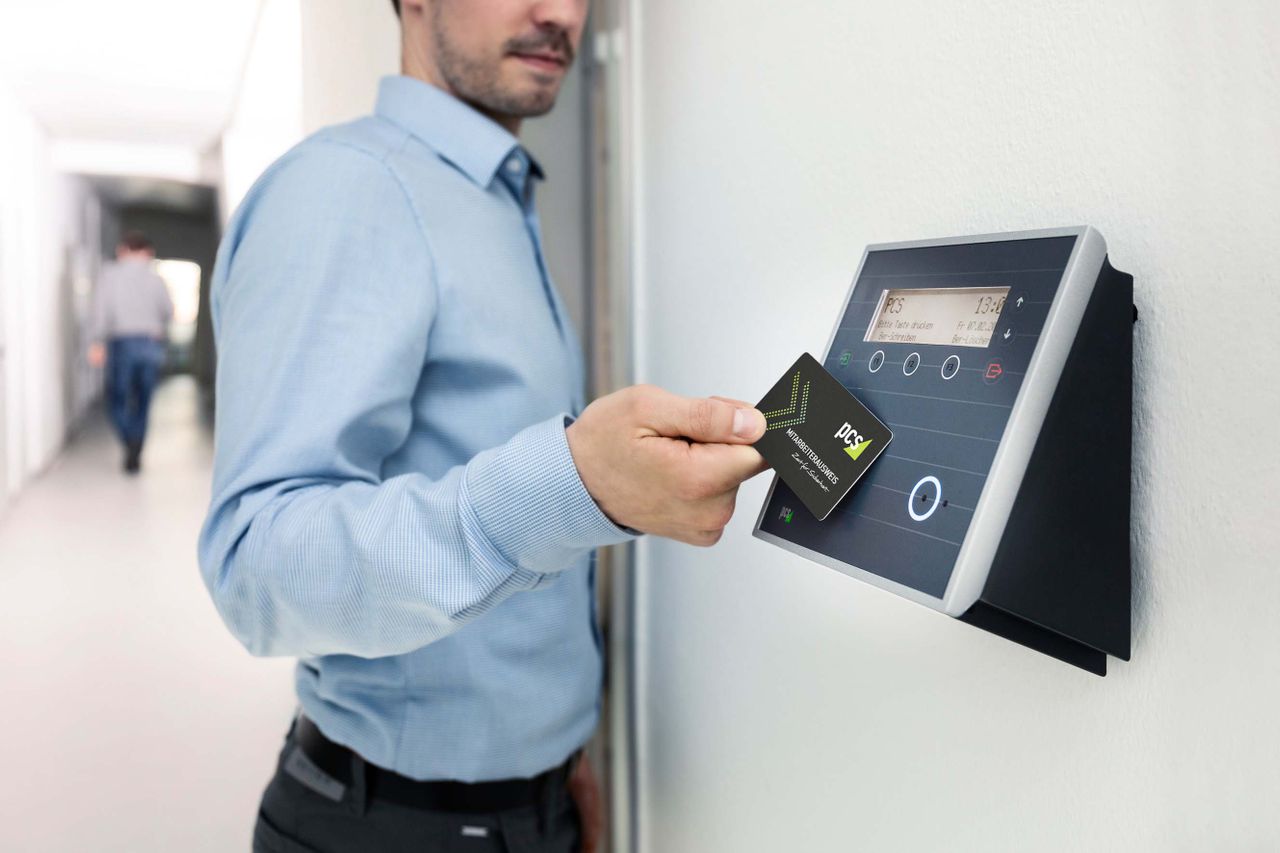
Fingerprint and facial-recognition terminals remain the gold standard for one thing above all: proving that the person who clocked in is actually the person standing at the door. There's no buddy-punching, no sharing a login, no clocking in from a phone left on a desk. For single-site operations — factories, warehouses, manufacturing floors — that certainty matters, and it usually matters more than convenience.
The tradeoff is real cost and real friction. Devices need to be purchased, mounted, wired for power and network, and maintained — sensors get dirty, firmware needs updates, and a device going offline at one site can stall an entire shift's attendance capture. There's also a growing category of employee discomfort: biometric data is sensitive, some jurisdictions regulate its storage and consent requirements closely, and employees increasingly ask legitimate questions about where their fingerprint or facial data goes and who can access it.
App-based geofenced check-ins: flexible, lightweight, distributed-friendly
App-based tracking flips the model: no hardware, no installation, no maintenance contract. An employee opens the app, taps to check in, and a geofence confirms they're within an approved radius of the work site — or, for field and sales teams, confirms they're at the client location they're supposed to be at. For distributed teams, hybrid offices, and field-based roles, this isn't just cheaper, it's often the only approach that works at all, since there's no single "door" to install a device at.
The obvious question is spoofing — can someone fake their location? Modern geofenced apps mitigate this with a combination of GPS accuracy thresholds, IP and network checks, and optional selfie-based verification at check-in, closing most of the gap without requiring dedicated hardware. What app-based tracking can't fully replicate is the hard biometric guarantee of "this exact person touched this exact sensor" — for most white-collar and distributed teams, that's an acceptable tradeoff; for a single-entry manufacturing site, it may not be.
"The right attendance system isn't the one with the most advanced technology — it's the one that matches how and where your people actually work."
Matching the method to the workforce
A useful rule of thumb: if your workforce clocks in at one physical location every day, biometric hardware pays for itself in accuracy and is worth the maintenance overhead. If your workforce is distributed across offices, works hybrid schedules, or spends most of its day in the field, an app-based geofenced check-in removes hardware cost entirely while still giving HR a defensible, timestamped attendance record. Many mid-size companies land somewhere in between — biometric at the warehouse, app-based for the sales and support teams — which is exactly why attendance shouldn't be a single, company-wide either/or decision.
HRish supports both models natively, so HR teams aren't forced to standardize on one method across a workforce that doesn't actually work in one uniform way. Attendance data from either method flows into the same leave, payroll, and reporting pipeline, so switching methods for a specific team doesn't mean losing visibility.
Before choosing an attendance method, weigh these factors honestly:
- How many physical sites does your workforce actually check in from, and are they fixed or changing?
- Does your industry or region have specific rules governing biometric data collection and consent?
- Can your attendance system feed leave and payroll automatically, regardless of which check-in method a team uses?
Attendance automation isn't a one-size-fits-all decision, and treating it that way is how companies end up with a device sitting unused in a home office, or a geofenced app trying to police a single-entry factory floor. Choose based on how your teams actually show up to work, not on which method looks more modern on a vendor's homepage.
See both attendance methods running inside HRish
Explore the full HR management platform, or talk to our team about the right fit for your workforce.